

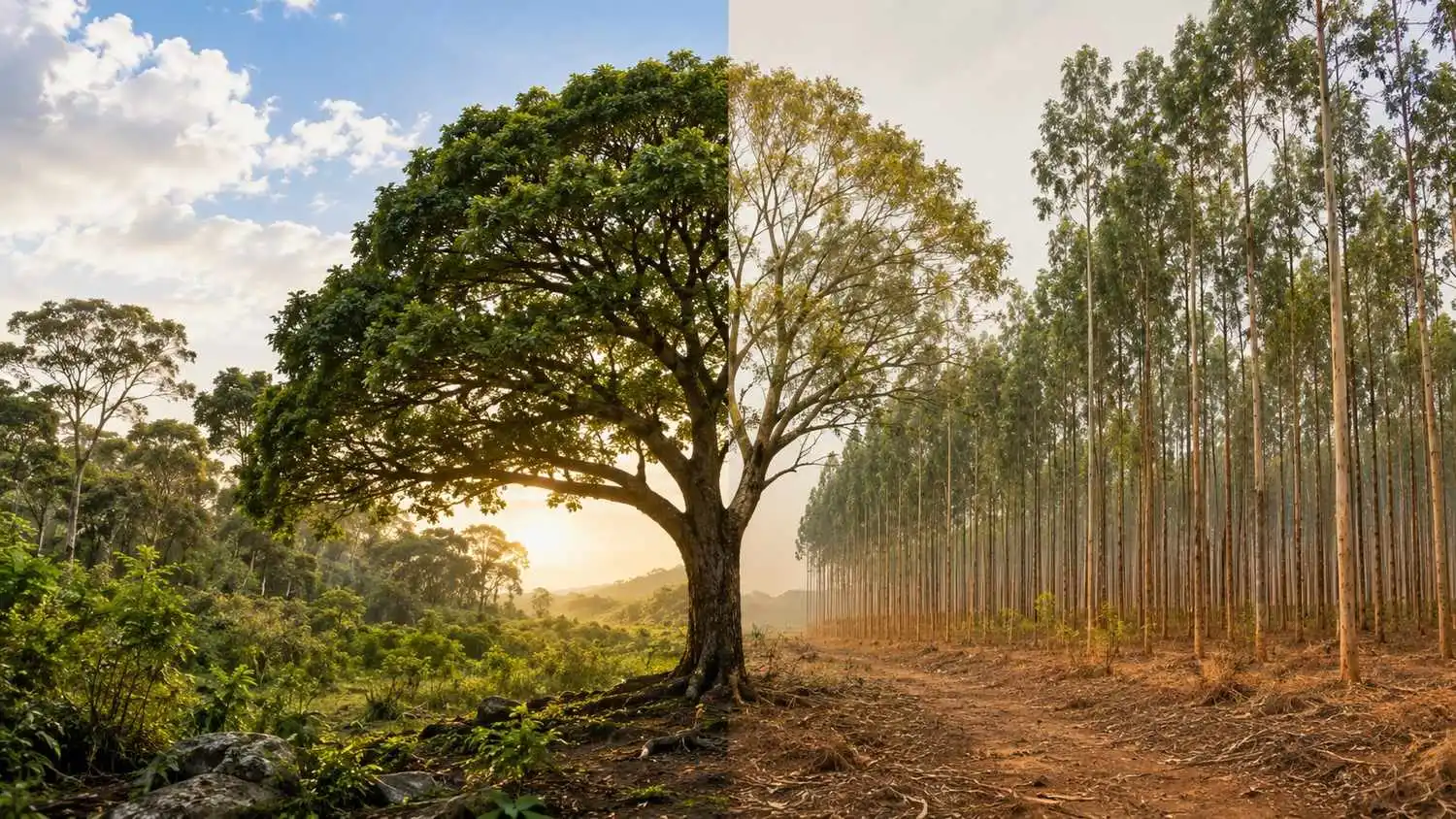
Climate change has made tree plantation one of the most popular environmental solutions. Governments, businesses, and communities plant millions of trees every year with the hope of reducing carbon emissions and restoring ecosystems. However, one important question is often ignored. Are we planting the right trees?
The answer matters because native trees offer far greater environmental benefits than exotic species. Choosing local trees instead of imported ones can make climate action more effective and sustainable.
Native Trees Store Carbon More Efficiently
The primary role of trees in fighting climate change is absorbing carbon dioxide from the atmosphere. Native trees are naturally adapted to local soil, rainfall, and climate conditions. Because they grow in their ideal environment, they often survive longer and develop healthier root systems that store carbon for decades.
Many exotic trees grow quickly during the early years but may have shorter lifespans or struggle in local conditions. A tree that dies early releases much of its stored carbon back into the atmosphere, reducing its long-term climate benefit.
They Need Less Water and Maintenance
India already faces water shortages in many regions. Planting trees that require excessive irrigation only adds pressure to limited water resources.
Native species are naturally suited to local rainfall patterns. Once established, they require much less watering and maintenance than many exotic varieties. This makes them a practical and cost-effective choice for cities, villages, and large-scale afforestation projects.
Native Trees Support Biodiversity
Climate resilience depends on healthy ecosystems, not just green landscapes. Native trees provide food and shelter for birds, butterflies, bees, insects, and other wildlife that have evolved alongside them.
Exotic trees often fail to support local biodiversity because native animals cannot use them as effectively. Without pollinators and healthy wildlife populations, ecosystems become weaker and less capable of adapting to climate change.
Stronger Protection Against Extreme Weather
Native trees have adapted to local weather conditions over hundreds or even thousands of years. They can better withstand droughts, heavy rainfall, seasonal temperature changes, and local pests.
Exotic species may struggle during extreme weather events. Higher mortality rates mean lower carbon storage and greater maintenance costs over time.
Healthier Soil Means Healthier Ecosystems
The benefits of native trees extend below the ground. Their roots improve soil structure, reduce erosion, and increase water infiltration during the monsoon.
Native trees also support microorganisms and fungi that maintain healthy soil. This creates a stronger ecosystem that stores more carbon and supports long-term environmental stability.
Exotic Trees Can Create Environmental Problems
Not every exotic tree is harmful, but some species become invasive after being introduced into new environments. They spread rapidly, consume large amounts of water, and outcompete native vegetation.
This reduces biodiversity and weakens local ecosystems instead of strengthening them. In some cases, removing invasive trees becomes expensive and time-consuming.
India Should Prioritize Native Species
Large-scale plantation drives should focus on trees that naturally belong to each region. Species that thrive in the Western Ghats may not be suitable for Rajasthan, while Himalayan trees are not ideal for southern India.
Using region-specific native species improves survival rates and delivers greater environmental benefits with lower maintenance costs.
Plant the Right Trees, Not Just More Trees
Tree plantation campaigns are often measured by the number of saplings planted. A better measure of success is how many trees survive, grow, and continue supporting the environment for decades.
Planting the right species is just as important as planting more trees. Native trees provide stronger carbon storage, protect biodiversity, conserve water, and create healthier ecosystems that are better prepared for a changing climate.
Conclusion
Fighting climate change requires more than planting millions of trees. It requires planting trees that belong where they are growing. Native trees are naturally adapted to local conditions, support wildlife, use fewer resources, and remain healthy for generations.
If India wants its tree plantation efforts to deliver lasting climate benefits, the focus should shift from quantity to quality. Planting native trees is one of the smartest and most effective investments for a greener and more climate-resilient future.